At the bottom of this page are the chords of several tunes in fixed and movable XroSol.
Re the chord sequences of tunes: In Bach’s day harmony was taught by studying hymns. These days we can use the jazz standards to learn harmony. Most jazz musicians now have the app iReal Pro installed on their mobile phones or tablets. It gives the chords of thousands of tunes using the Transatlantic note names. It is also able to show the chords in terms of the tonic aka keynote using degrees of the major scale as roots, a form known as Nashville of Number Notation.
For example in the key of C major here are some typical chord sequences here is shown as Transatlantic, Nashville and lower case XroSol.
Transatlantic – – – – – – – – – — – Nashville- – – – – – – – – – – – relative XroSol
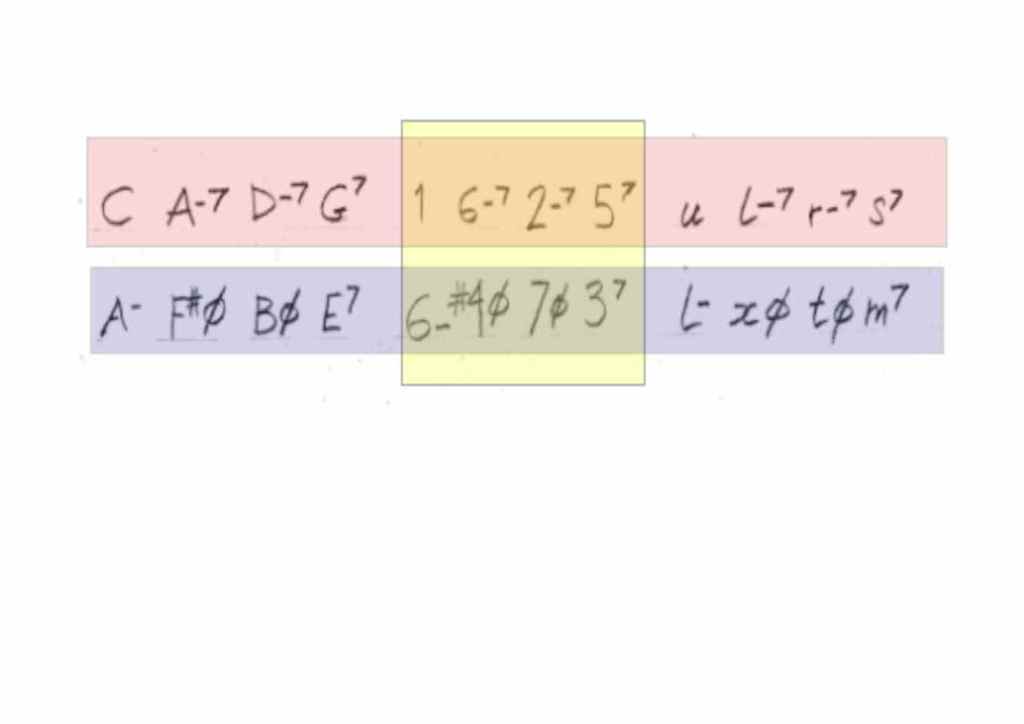
You will see that in Nashville the minor tonic gets to play second fiddle to the major whereas in XroSol it has equal status, as do the modes.
This demonstrated in Lionel Ritchie’s beautiful ballad Hello . La is the minor tonic.
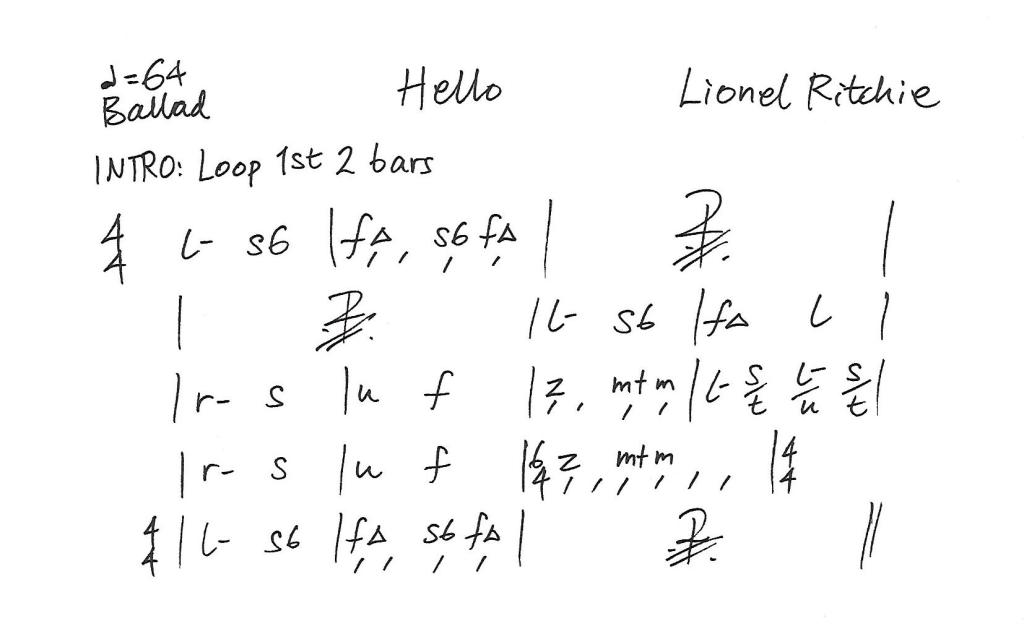
Note that the la triad changes from minor to major before the song sets off on the journey round the cycle of 5ths – r- s u f z m. These are all triads and introducing the chromatic note z he avoids the weak sound of trf, the diminished triad. The z triad is major, and a dramatic challenge to the minor tonic, known as the Neapolitan chord.
Another way to avoid the weakness of the diminished triad is to add a seventh – t r f l . The seventh chords became popular in the early baroque period, around 1620, and it became common practice to go round the cycle of 5ths using 7th chords, clockwise in this diagram, starting anywhere. This is known as the tonal cycle of 5ths. The fifth down between f and t is a diminished 5th (only 6 guitar frets) which keeps the cycle within the familiar seven note scale.
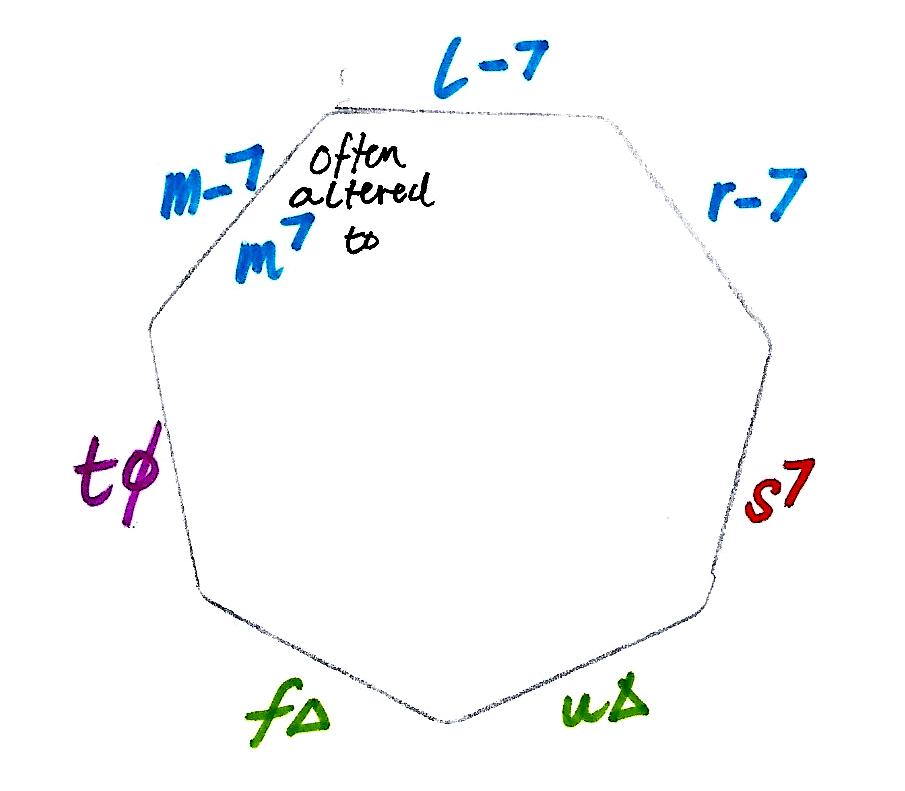
Note there are three minor 7ths chords and two major 7th chords. Two chords are unique, our trfl chord, known as minor 7th b5 or half diminished, and the 7th, though m-7 is often altered to m7 if it is to act as a more typical dominant chord of l- .
There are many examples to be found in baroque composition and in popular song. One example is the song I will survive recorded by Gloria Gaynor.

https://www.youtube.com/results?search_query=i+will+survive+gloria+gaynor
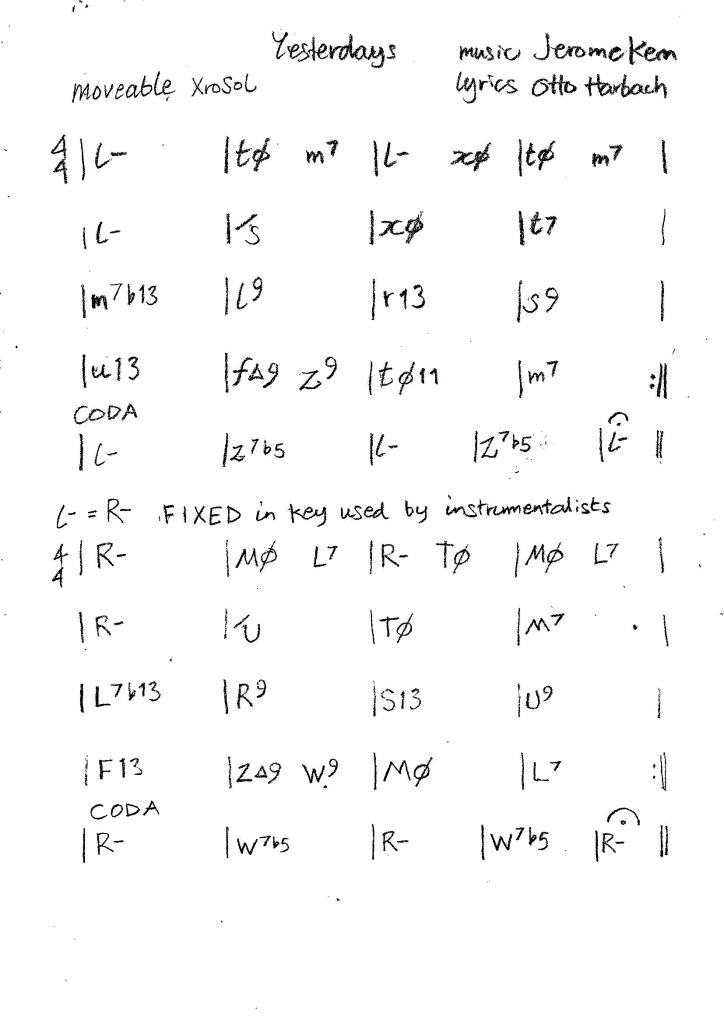
The difference in meaning between lower and uppercase is shown in the jazz standard Yesterdays, given first with l- as the minor tonic playable in any key, followed by the same chords in the key most often used by instrumental players R- aka D minor. After establishing the tonic in the first four bars it begins a journey round the cycle of 5ths from x to w (x t m l r s u f z w).
There is beautiful song which offers various way of writing chords in the minor key , that is Unbreak my Heart which I happened to hear on the car radio while making a recycling trip. Toni Braxton in T- (aka B minor) and the chorus moves to R- and guitar break is in F- , in all instances using similar slow moving chords. Toni’s is a most touching rendition and I wrote this harmonic analysis as soon as I got home.
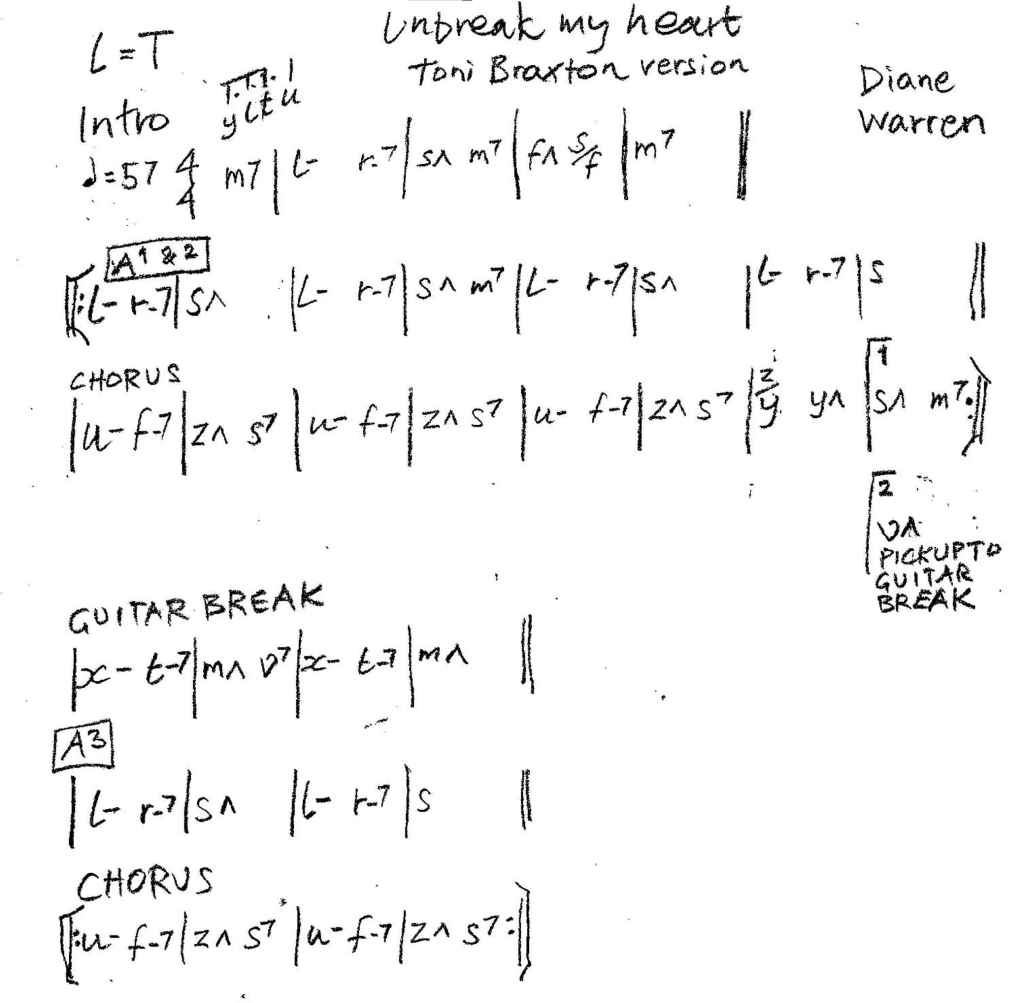
Search here for the chords of tunes written in XroSol. Unlike iReal Pro you cannot yet transpose the fixed version from key to key. that is an ideal to work towards. You would be welcome to add tunes to the list: in hand writing or type.
Toots Thielmans Bluesette traces a beautiful melody through the cycle of fifths from tsi to va ( tsi mi la re so ut fa ze wu yu va ) sneaking back into the home key with a re so mi la progression.
While harmonic progressions get passed from song to song the melody is more distinctive and therefore of unique value to songwriters and their publishers. The melodies shown on this page illustrate how melharmony might look. Perhaps, if it is found to be helpful, it will be simply included in the transposition options on sites such as musicnotes.com who have all the royalty channels are already set up. In the mean time a tune’s appearance on this page will encourage students of harmony to compare versions on YouTube or Spotify so it may be quite profitable to leave it open for discussion temporarily. However, a tune will be immediately removed if the copyright holders email me their objection to its inclusion on the XroSol page.
Here is the melharmony of a beautiful classical piece Saint Seans’ The Swan . With both melody and harmony using the same names we can spot more quickly the relationship between the melody, its harmony and changes of key, which are hidden in traditional notation from all but the very experienced.
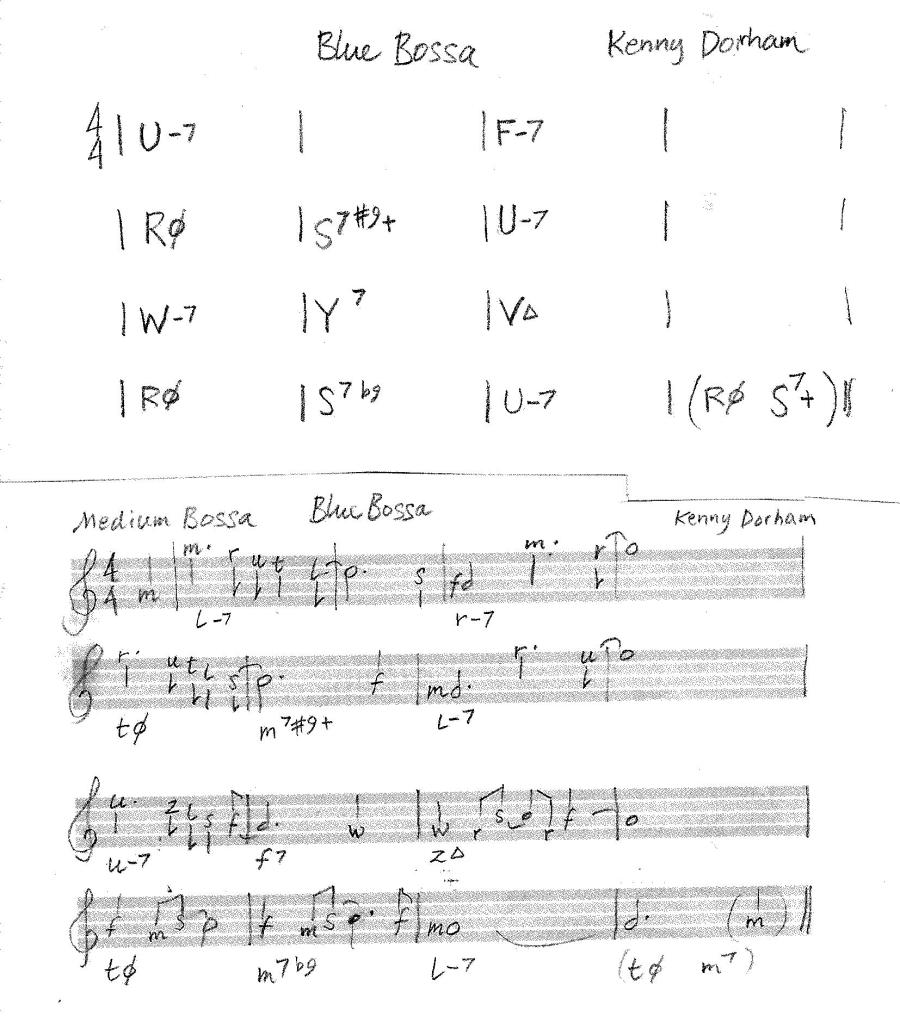
This is the melharmony of a popular jazz standard Blue Bossa. It starts with a setting up the key , U minor in the first 8 bars, then there is a dramatic modulation to V major in the 9th bar, with a 2 , 5 ,1 progression, while U- is restored in the last line, also with a 2,5,1. It is usually played in U- which is generalised to l- in the melharmonic analysis. Note the matching melody and bass notes in the modulation in bar 9.
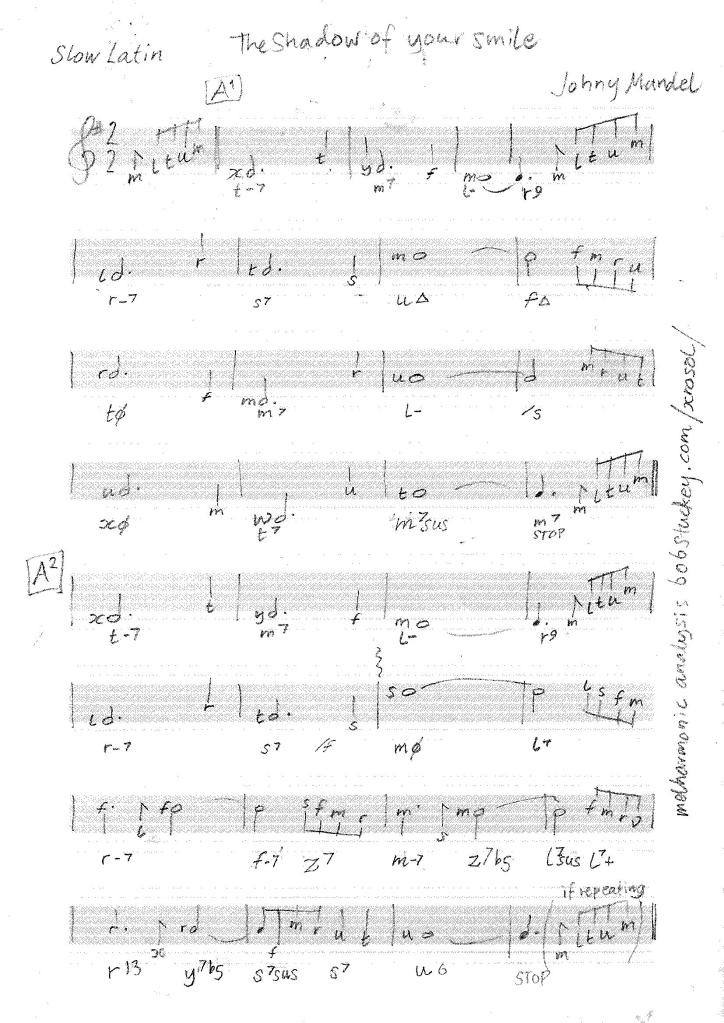
The major scale is ut (aka do) re mi fa la tsi do. The minor scale is la tsi ut re mi fa sol la with two extra members, yu , the leading note and xe if yu is nearby. Bach would never allow xe on its own as it meant a modulation (perhaps to m- ) was on the cards. In this next tune, The Shadow of Your Smile, xe makes a dramatic appearance as soon soon as the first five notes establish la as the tonic, to be soon followed by yu. The minor tonic submits to the major in bars 5 to 8 , regaining its position as tonic in the remaining bars of A1. Yet on the seventh bar of A2 (marked by a wiggly line) the major tonic begins its journey to command the final cadence. In this stave the five lines of the traditional staff are white against a grey background with a couple of grey leger lines, enough for most melodies: the grey makes a nice background for black letters. If you want to experiment with this manuscript paper click on this link.
 Bob Stuckey

